The long-term aim is to have the herd fully sire and dam matched, maintain strong fertility, improve the age structure and build cow families that suit Donald’s Farm.
When NZYF took over the farm, the herd included Milking Shorthorns, a breed Donald had a strong connection with. A small number remain on farm and are still part of its story, but commercially the team needed a herd better suited to the land, climate and long-term goals. So, the decision was made to move into Jerseys.
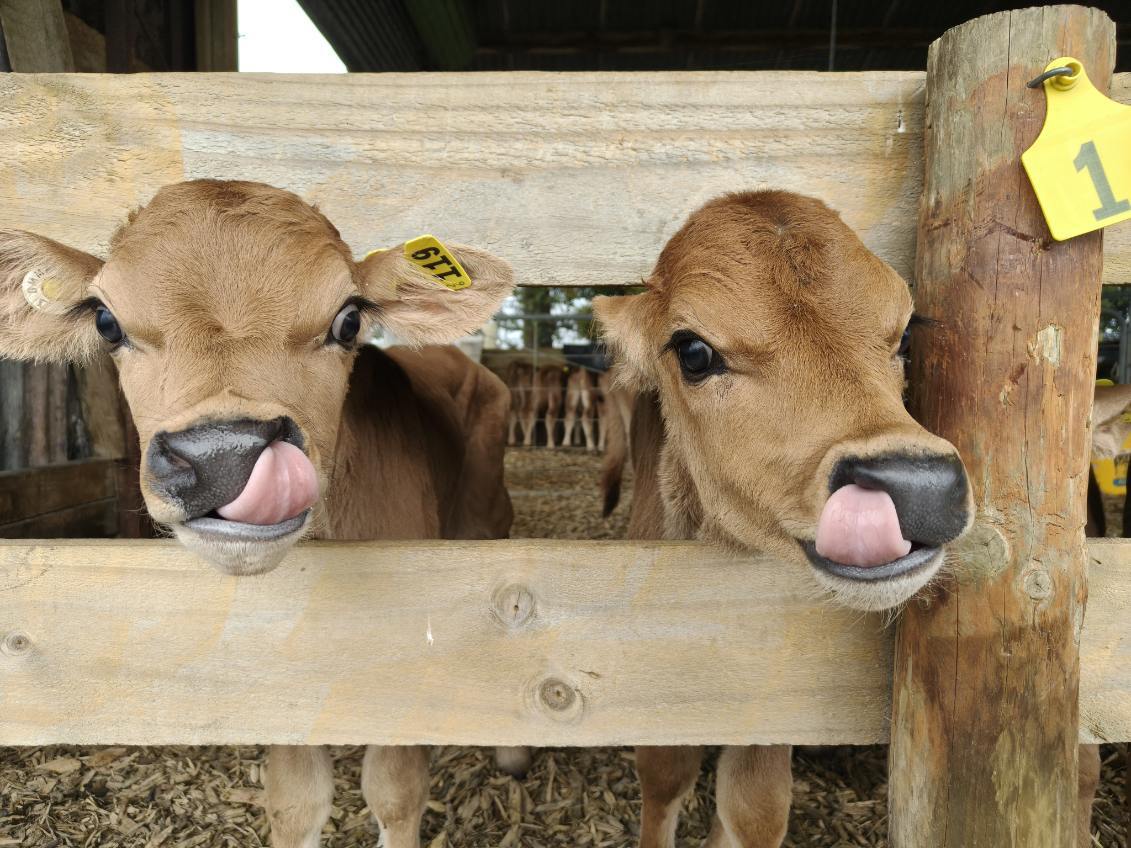
Julie says Jerseys were a practical fit for Donald’s Farm. The property’s heavy, wet soils mean lighter animals are better suited to the conditions. They are also smaller and easier for young visitors to be around, they suit the farm’s once-a-day milking system from Christmas, and they are known for fertility, good feet and legs, and ease of calving.
The ideal cow for Donald’s Farm is not just a great producer. She needs to suit the soil, handle the walking, calve easily, get back in calf, stay healthy and be straightforward to manage in a one-person farm system.
“The farm is quite steep in places, so we need cows with good feet and legs,” Julie says. “We have very few feet problems in the herd, despite the long walks. Jerseys are renowned for their hard, black feet.”
The Jerseys have also become part of the farm’s education story.
When school groups visit, Julie often shows them a Jersey, a crossbred cow and a Milking Shorthorn, then asks which one they think produces the most milk or makes the most money.
“They usually pick the big cow,” she says. “Then we talk about herd testing, fat and protein, milk solids and how farmers get paid. They find out that bigger is not always better.”
Donald’s Farm helps kids see there is a lot more to farming than they might realise, from knowing your animals and caring for them well, to using good information to make better decisions.
That purpose also sits behind CRV’s wider sponsorship of NZYF. Announced in September 2024, the partnership was created to support young people in the food and fibre sector, with opportunities for members to connect with the CRV team and learn more about herd management and genetics.
Former farm manager Sam Waugh played an important role in getting the farm system established and aligned with Donald’s vision.
Julie says Sam understood the bigger picture of the farm, including its role in education, and helped create a strong platform for the next stage of herd improvement.
New farm manager Carlos Pinillos, originally from Peru, is now carrying that work forward. He brings a strong farming background and a keen interest in reproductive technologies and breeding.
Julie says Carlos is well placed to continue refining the farm system and build on the genetic progress already underway.
With CRV genetics, genomic testing, herd recording and a clear vision for the type of cow the farm needs, Donald’s Farm is well placed to keep improving.
Julie says the next stage is about building on strong foundations, while staying true to the farm’s bigger purpose of helping young people understand farming.
“We’ve got a good base, and with the support of generous sponsors like CRV, we’re excited to keep building on that.”