
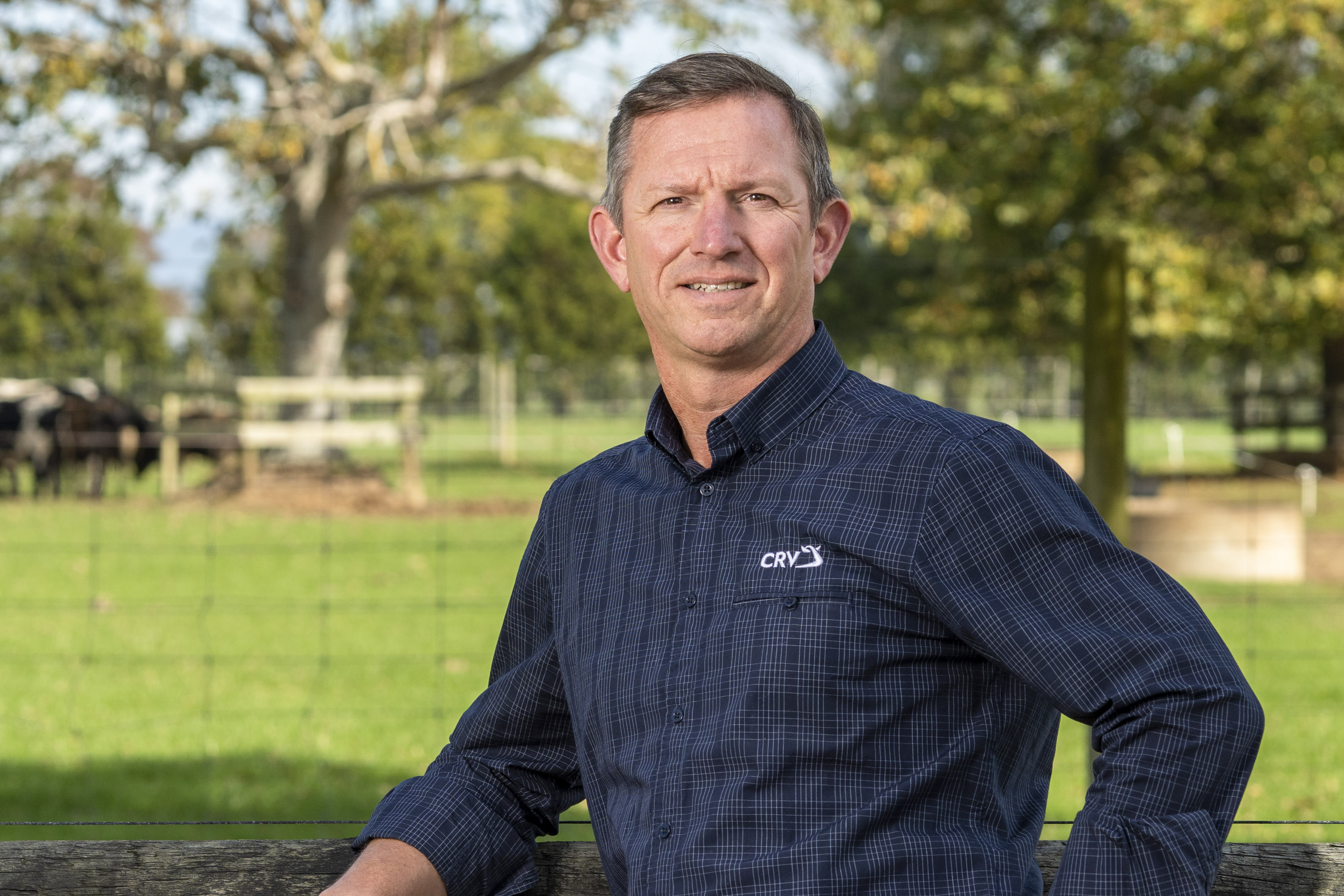
CRV Manager Grass-Fed Genetics Peter van Elzakker says mating dairy cows to beef sires is becoming an increasingly important part of farmers’ breeding strategies, helped by strong beef prices, greater use of sexed semen and better-quality information.
“Farmer interest in beef-on-dairy continues to grow and it is now one of the fastest growing insemination segments,” he says. “The strong beef market has made the opportunity much more visible. Farmers are becoming more discerning about the genetics they use and increasingly recognise the value that can be created from a beef-on-dairy calf.”
Industry figures¹ show beef breeds now account for around 12% of dairy inseminations nationally, putting them at a similar level to Jersey. CRV is tracking above the industry average, with beef semen for use over dairy cows making up just under 15% of genetics sold last season, compared with 8% in 2021. Year to date, CRV’s beef-on-dairy sales are 6% ahead of the same time last year and are expected to account for around 16% of total sales by season end.
An increasing number of farmers are using sexed semen and more accurate herd information to target the cows they want to breed replacements from, and which are mated to beef. Better breeding value predictions through genomic testing like myDNA, along with tools such as mating plans, are giving farmers more confidence to make those decisions.
As a result, mating dairy cows to beef sires is becoming an intentional part of their breeding strategy, rather than something farmers simply turn to at the tail end of mating.
“When you’re using sexed semen and want to minimise progeny from your bottom quartile, or even the bottom 50% of your cows, beef-on-dairy becomes a really good tool in your breeding plan,” Peter says.
Mating dairy cows to beef sires is becoming a deliberate breeding decision, with greater consideration given to the potential of the animal produced.
“Five years ago, the focus when mating dairy cows to beef sires was mainly on maternal traits, like low birth weight, days in milk, easy calving and gestation length, and what was good for the dairy farmer.
“Producing a quality product for the rearer and grower-finisher wasn’t really considered. That has certainly shifted, with much greater emphasis now on the calf’s growth and performance beyond the dairy farm.”
A good beef sire selected for use over dairy cows needs to do more than produce an easy born calf. It also needs to produce an animal with the growth and performance to be worth rearing and finishing, Peter says.